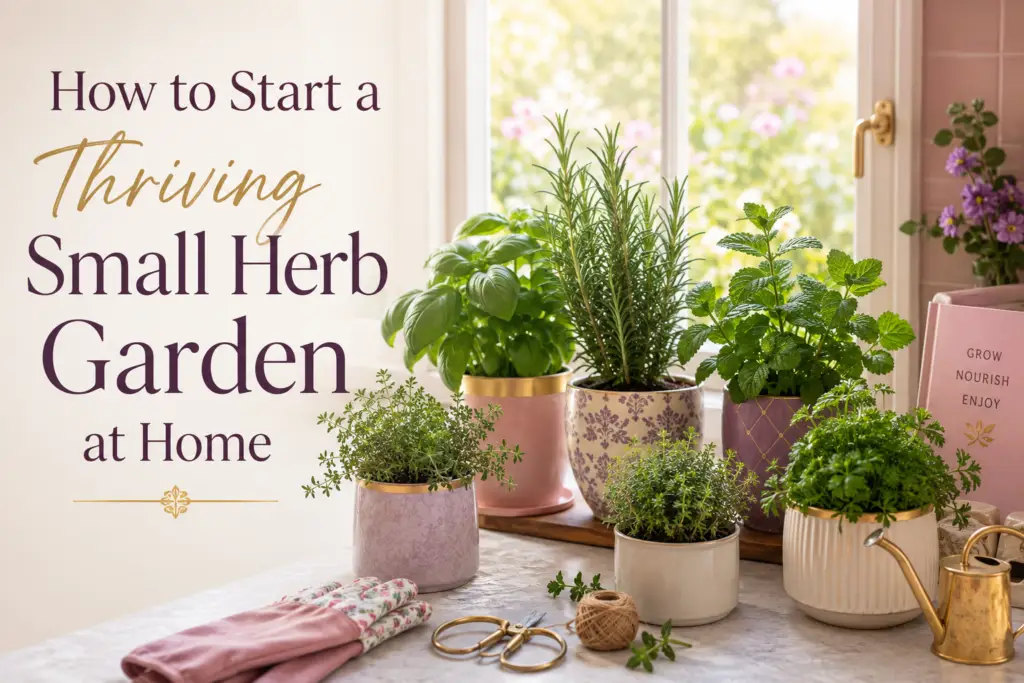
There is something quietly satisfying about reaching for a handful of fresh herbs while you are cooking and knowing they have grown only a few feet away.
It might be basil for a bowl of pasta, mint for a cup of tea or a few sprigs of thyme for a tray of roasted vegetables. The amount you pick may be small, but the pleasure of using something you have grown yourself can make an ordinary meal feel a little more thoughtful.
For a long time, I assumed growing herbs properly required a generous garden, raised beds or at least a sunny patio. It seemed like one of those lovely ideas that belonged to people with more space, more time and perhaps more gardening knowledge than I had.
What I gradually discovered was that herbs are often happiest when they are close enough to be noticed. A few pots near the kitchen can be easier to care for than a large patch at the far end of a garden. You see when the leaves begin to droop, when new growth appears and when a plant is ready for a light trim. Caring for them becomes part of the rhythm of the home rather than a separate gardening task.
A small herb garden can live on a kitchen windowsill, a narrow balcony, a bright shelf or a little table near a window. It does not need to begin with matching pots, expensive tools or an ambitious collection of plants. It simply needs a suitable place, a few herbs you will genuinely use and a routine that feels manageable.
Beginning with the Space You Already Have

The easiest way to begin is to look at your home as it is rather than imagining the garden you think you ought to have.
There may already be a small area that receives good light for part of the day. It could be the corner of a windowsill where nothing much happens, a shelf near the back door or a sheltered spot on a balcony. Even a modest patch of brightness can become useful when you choose the right herbs for it.
I have found that small gardens often begin with noticing. You start paying attention to where the morning light falls across the worktop, which window stays brightest in the afternoon and whether a balcony corner feels warm or exposed. These details matter more than having a beautiful arrangement from the beginning.
A herb garden close to the kitchen is especially practical because it becomes visible in everyday life. When the plants are nearby, you are more likely to check the soil, remove a tired leaf or pick a few stems while cooking. They are less likely to be forgotten than plants hidden in a corner you rarely pass.
It is tempting to fill the available space immediately, particularly when garden centres display rows of healthy herbs together. A smaller beginning is usually kinder to both you and the plants.
Three or four herbs are enough to create a garden that feels abundant without becoming difficult to manage. You can learn how quickly each one dries out, how much light it enjoys and how often you actually use it. Once that first group settles into your home, it becomes much easier to add more with confidence.
The plants do not need to be perfectly coordinated. A collection of ordinary terracotta pots can be just as charming as decorative ceramics. What matters most is that the containers allow water to drain and give the roots enough room to grow.
If your home has very little natural light, the idea is still possible. Some herbs are more forgiving than others and a small grow light can make an enormous difference. It is better to work honestly with your conditions than to keep placing sun-loving plants somewhere they will struggle.
The garden should fit into your home rather than making you feel that your home is unsuitable for gardening.
That shift in perspective can make the whole process feel lighter. You are not trying to recreate a cottage garden on a windowsill. You are creating a small, useful growing space that belongs exactly where you live.
Finding the Right Place for Your Herbs
Light is one of the most important parts of growing herbs well, but it can be surprisingly difficult to judge at first.
A windowsill may look bright when you stand beside it, yet only receive a short burst of direct sun. Another spot may seem less impressive but stay gently illuminated for most of the day. Spending a day or two observing the light can save a great deal of frustration later.
Most herbs enjoy a bright position and many thrive with around six hours of sunlight. Basil, rosemary and thyme are particularly fond of warmth and brightness. Parsley, mint and chives can often cope with a little less, although they still appreciate good natural light.
The direction of the window can influence what will grow comfortably there. A south-facing window is often the brightest, while an east-facing one gives softer morning light. West-facing windows can become warm in the afternoon and north-facing windows usually offer less direct sun.
These descriptions are useful, but every home is different. Nearby buildings, trees and the depth of the room can change the amount of light dramatically. Watching the actual space is more reliable than relying only on the direction it faces.
I once placed a pot of basil in what looked like the loveliest position in the kitchen. The plant appeared almost decorative against the window and I was certain it would thrive there. Within a short time, the stems began leaning sharply towards the glass and the leaves lost some of their strength.
The spot looked bright to me, but the basil was quietly telling me it needed more.
Moving it closer to the strongest light made a noticeable difference. The new growth became fuller and the plant no longer stretched as desperately. It was a simple reminder that plants communicate through their shape and colour long before they completely fail.
A plant that becomes long and thin may be reaching for more light. Leaves that fade or growth that slows can also suggest the position is not bright enough. Scorched or dry patches may mean the plant is too close to intense glass or heat, especially during summer.
Windowsills can also be affected by draughts, radiators and sudden temperature changes. A herb may receive enough light but still struggle if it is repeatedly chilled by an open window or dried out by heat rising from below.
The best position is usually bright, reasonably stable and easy to reach.
Accessibility matters because the healthiest garden is often the one you naturally pass. A pot placed somewhere inconvenient may be forgotten until the compost is completely dry. A herb beside the kettle or near the chopping board becomes part of daily life.
Balconies offer wonderful possibilities, even when they are narrow. A small plant stand, railing planter or group of pots can create plenty of growing space without taking over the area. Shelter is useful because strong wind can dry containers quickly and damage delicate leaves.
Outdoor herbs may need more frequent watering than indoor ones, particularly during warm weather. Pots can dry far faster than garden soil, especially when they are small or exposed.
A grow light is worth considering when natural light is limited. It does not need to turn the room into a greenhouse or create an unattractive glow all day. Compact lights designed for small plants can sit neatly above a shelf or group of pots.
The aim is not to find a perfect place. It is to choose the best available place and remain willing to adjust it.
Herbs are wonderfully revealing. They show you when they are comfortable through steady growth, fresh colour and new leaves. Paying attention to those small changes is often more useful than trying to follow a rigid rule.
Choosing Herbs That Suit Your Home and Habits
A herb garden becomes far more rewarding when it contains plants you genuinely enjoy using.
It is easy to be drawn towards whatever looks healthiest or most attractive at the garden centre. A row of fragrant plants can make every herb feel essential. Once they are home, however, the most valuable ones tend to be those that naturally find their way into your cooking.
Thinking about the meals you already make can guide your choices.
Basil is a lovely option if you enjoy pasta, salads, tomato dishes or homemade sauces. It grows quickly in warmth and good light, although it can be sensitive to cold and overwatering. Pinching the growing tips encourages a fuller plant and helps prevent it from becoming tall and sparse.
Mint is generous, vigorous and wonderfully fragrant. It suits tea, summer drinks, fruit, salads and many savoury dishes. It is also a determined grower, which is why it is best kept in its own pot. Given the opportunity, its roots can spread through a shared container and overwhelm neighbouring herbs.
Parsley is dependable and useful in an enormous range of meals. It can be stirred into soups, scattered over vegetables or chopped into sauces. Flat-leaf parsley often has a stronger flavour, while curly parsley brings texture and a fresh, bright appearance.
Chives are compact and particularly well suited to small spaces. Their mild onion flavour works beautifully with eggs, potatoes, salads and creamy dishes. They can be snipped little and often, then allowed to regrow.
Thyme is small but deeply aromatic. It prefers well-drained compost and usually dislikes sitting in wet soil. Its woody stems and tiny leaves may look delicate, yet it can be a resilient plant when given enough light.
Rosemary also enjoys sun and drier conditions. It needs a pot with excellent drainage and space for its roots. The scent released when you brush against the leaves is one of the quiet pleasures of keeping it nearby.
Coriander is another popular choice, although it can be more temperamental. It tends to grow quickly and may bolt in warm conditions, meaning it sends up flowers and begins producing seed. Sowing small amounts regularly can provide a steadier supply than relying on one plant for months.
Oregano and sage can also work well in containers, particularly in sunny positions. They both have distinctive flavours, so they are most worthwhile when they suit the food you regularly prepare.
Choosing herbs with similar needs can make care simpler.
Rosemary, thyme, oregano and sage generally appreciate bright light and compost that is allowed to dry a little between waterings. Basil, parsley, mint and chives often prefer more consistent moisture.
This does not mean every plant needs a completely separate routine, but grouping similar herbs can reduce guesswork. It is much easier to care for a collection when the plants beside each other are asking for roughly the same conditions.
Smell can be a helpful guide too.
Gently rub a leaf between your fingers at the garden centre and notice whether the scent makes you want to use it. Herbs bring a sensory quality into the home that ordinary houseplants do not always offer. Their fragrance becomes part of the kitchen, especially when leaves are watered, brushed or picked.
Starting with herbs from a nursery is often easier than growing everything from seed. Established plants give you something usable almost immediately and make it easier to understand their mature shape.
Seeds can be deeply satisfying, particularly for basil, parsley, coriander and chives, but they require more patience and consistent attention. There is no need to prove anything by beginning at the most difficult point.
A healthy young plant is still something you will nurture, learn from and help to grow.
It can also be useful to avoid buying the largest possible plant. Very full supermarket herbs are often crowded with many seedlings in one small pot. They look abundant at first but may struggle because their roots are competing for space.
These pots can sometimes be divided carefully into smaller groups and replanted. Even when you keep them together, moving them into a larger container with fresh compost can give them a better chance.
The best beginner collection is not the most impressive one. It is the one you can picture yourself using and caring for with ease.
Planting Herbs in Pots That Help Them Thrive
The container is part of the growing environment, not simply a decorative cover.
A beautiful pot may look perfect on the windowsill, but without drainage it can hold water around the roots and slowly damage the plant. Herbs generally prefer compost that is moist but not waterlogged, with some needing much drier conditions than others.
Drainage holes allow excess water to escape. A saucer beneath the pot protects the surface and makes indoor watering less messy. Emptying any water left in the saucer after a short while prevents the roots from sitting in it.
Decorative pots without holes can still be used. Keeping the herb inside a plain nursery pot and placing that inside the decorative container is a practical solution. The inner pot can be lifted out for watering, allowed to drain and then returned.
Pot size matters because roots need both space and air.
A very small container dries quickly and can restrict growth. A pot that is far larger than the root ball may hold too much damp compost around a young plant. Moving up gradually to a container a few centimetres wider than the existing one is usually a comfortable choice.
Fresh, good-quality multipurpose compost is suitable for many common herbs. Mediterranean herbs such as rosemary and thyme benefit from excellent drainage, so mixing in some horticultural grit or perlite can help create a lighter texture.
When I repot a herb, I like to begin by watering it lightly beforehand if the compost is very dry. This can make the root ball easier to handle and reduce the shock of moving it.
The plant should slide from its old container with gentle pressure. If the roots are tightly wound around the base, teasing them apart slightly can encourage them to grow into the new compost. There is no need to pull them aggressively. A little loosening is usually enough.
A layer of compost goes into the base of the new pot before the plant is positioned at roughly the same depth it was growing before. Burying the stem too deeply can create problems, while leaving the root ball sitting above the compost can cause it to dry out.
Fresh compost can then be added around the sides and pressed gently enough to remove large gaps without compacting it heavily.
Watering after planting helps settle the compost around the roots. The water should be able to flow through the drainage holes rather than collecting at the bottom.
There is often a temptation to plant several herbs together because mixed containers look abundant and attractive. This can work when the herbs have compatible needs and enough room, but individual pots are usually easier for beginners.
Separate containers allow you to move each herb, water it according to its own needs and replace it without disturbing the others. They also prevent vigorous plants such as mint from taking over.
Grouping individual pots closely together can create the same lush appearance while keeping care simple.
The arrangement does not need to remain fixed. Pots can be moved as the seasons change, plants grow or the light shifts. A position that works beautifully in spring may become too hot in midsummer or too dim in winter.
Turning the pots every few days can also encourage balanced growth. Herbs naturally lean towards the strongest light, so rotating them helps prevent one side from becoming much fuller than the other.
After repotting, some plants pause briefly before producing new growth. This does not always mean something has gone wrong. Roots are adjusting and beginning to explore the fresh compost.
The garden may not look instantly perfect, but that is part of its charm. It develops through small changes rather than arriving fully formed.
Caring for, Harvesting and Enjoying Your Herbs
Watering is often the part of herb care that creates the most uncertainty.
It can feel caring to give plants water regularly, but too much can be just as harmful as too little. A schedule that says to water every few days does not account for temperature, pot size, light or the needs of each herb.
The compost offers better guidance.
Pressing a fingertip into the top couple of centimetres can help you judge whether it is still damp. Basil and parsley may appreciate watering when the surface begins to feel dry. Rosemary and thyme often prefer the compost to dry more noticeably before they are watered again.
The weight of the pot can also become a useful clue. Damp compost feels heavier, while a pot that needs water becomes noticeably lighter. Over time, this becomes surprisingly intuitive.
Water thoroughly enough for moisture to reach the whole root ball, then allow the excess to drain. Repeatedly adding tiny amounts may only wet the surface and leave deeper roots dry.
Drooping leaves can indicate thirst, but they can also appear when roots are struggling in wet compost. Checking the soil before reacting prevents the common mistake of watering an already saturated plant.
Regular harvesting helps many herbs become fuller.
Basil responds well when the stem is pinched just above a pair of leaves. New shoots can then grow from that point, creating a bushier plant. Chives can be cut near the base in small amounts and allowed to regrow. Mint also benefits from frequent picking and can become fuller after a trim.
Woody herbs such as rosemary and thyme should be harvested gently, particularly while the plants are young. Taking a few sprigs from fresh growth is usually better than cutting deeply into old woody stems.
Picking little and often keeps the herbs useful and prevents the garden from becoming overgrown. It also builds the habit of noticing them.
A handful of basil can transform a simple tomato salad. Mint leaves can be steeped in hot water or torn into yoghurt. Parsley can brighten a bowl of soup and rosemary can lend fragrance to potatoes, bread or roasted vegetables.
These uses do not need to be elaborate. The garden earns its place through the smallest moments.
There is a particular pleasure in cutting exactly what you need rather than opening a packet of herbs, using a small amount and watching the rest wilt in the fridge. Home-grown herbs can reduce waste while making fresh flavour easier to reach.
Plants will not remain perfect all the time. Leaves may yellow, stems may become untidy and one herb may thrive while another struggles.
Removing damaged leaves keeps the plant tidy and allows you to look more closely for problems. Sticky leaves, fine webbing or tiny insects can indicate pests. Catching them early makes them easier to manage.
A gentle rinse, wiping the leaves or using an appropriate mild treatment may be enough for a small problem. Keeping some space between plants also improves airflow and makes it easier to inspect them.
Feeding can support herbs during active growth, particularly when they remain in containers for a long time. A diluted liquid feed used according to the label is usually sufficient. Too much fertiliser can create weak growth or reduce the intensity of flavour, so more is not always better.
Some herbs are naturally short-lived. Basil may decline as the weather cools, while coriander often completes its growing cycle quickly. This is not a failure. It is simply part of how the plant grows.
Replacing a tired herb, taking cuttings or sowing another small batch keeps the garden moving. A productive herb garden is not a display that stays unchanged. It is a living collection that develops with the seasons and with the way you use it.
The care itself can become grounding.
Checking the leaves while the kettle boils, watering a dry pot or snipping chives for lunch takes only a moment. These small acts create a sense of connection without asking for a large amount of time.
There is no need to become an expert before you begin. Most of the knowledge arrives through observation. You learn what a thirsty basil plant looks like, how quickly mint fills a pot and where thyme prefers to sit.
A small herb garden grows alongside your confidence.
It may begin with three pots on a windowsill and gradually become a shelf of familiar scents and flavours. You may lose a plant, move another several times and discover that the herb you expected to use least becomes your favourite.
None of that makes the garden unsuccessful.
Success can be as simple as noticing new leaves, using a sprig in dinner or feeling a little more connected to the living things in your home.
A garden does not have to be large to become meaningful. Sometimes it begins in the smallest available space, with a handful of compost, a few useful plants and the quiet decision to see what might grow.